Monday, 9 July 2012

London 2012 - Olympics To Cause Road Nightmare


Slowly but surely, spectators are descending into London to marvel at the ever-pressing Olympic games. A buzz of excitement has slowly been hitting the streets as more and more fans from all over the world turn our capital into even more of a cosmopolitan paradise. One concern, however, which has been echoing throughout, is congestion on the roads.

Gridlocked London
There is no point in sugar-coating it – London is not the easiest place to be a vehicle owner. Simply walk around the capital and you’re bound to spot a few drivers behind the wheel desperately crooning their heads to find an empty parking space. With more and more people filtering into the city – are we ready for the sudden increased population, or will our roads be in a state of permanent semi-gridlock?

In 2005, during the bidding process, the Olympic Committee visited London to scope out these issues and see whether this concrete jungle could cope.
“There we no delays, quite simply” said bid committee boss Sir Keith Mills.
The fleet of vehicles filled with delegates was followed with a Bond-esque approach, GPS and CCTV tracked them for every movement to ensure no delays were present.
“Whenever they approached red traffic lights, we turned them green” Sir Mills added.

Sir Keith Mills Talks
Nothing is being left to chance with the coming games; the organisers are pushing for efficiency. Over 50 roads are planned to be wholly or partly closed-off during the events, traffic lights are to be effectively ‘turned off’ and a fair few of Big Towns side roads are to be conserved for athletes, VIPs and IOC members so they can get from their rather dapper Mayfair hotels to the stadium in, apparently, under 20-minutes.
Further to this, we will see nearly 60 crossings for the pedestrian to be made ‘out-of-action’ and just over 40 bus stops, closed. A planned action, dubbed ‘Traffic Light Phasing’ will be put into place and around 30-miles of special lanes (now to be called ‘The Olympic Route Network’) will be reserved for those of apparent importance, operating from 7.00am to 7.00pm.

The big question being whispered around the country is, and rightly so, is all this planning, effort and money-loss worth it? The cost to the capitals economy is estimated to be, well, enormous. The answer to this questions remains to be seen, road congestion itself is estimated by some to cost the UK an impressive £8 billion a year,

Figures can be misleading of course, a good example being the Governments current suggestion that our motorways may see an increase to 80mph to bring them on par with the a majority of other nations. The organisation ‘No to 80’ is already predicting, if this increase should go ahead, will cost over £1 billion a year, £62.4 million in road casualty costs, £180.4 million in carbon costs and £766.6 million to be from the petrol-pumps. Ignoring the carbon costs for a second, if the people at No to 80 are correct, the only strange statistic is why the Government hasn’t implemented this already – because £766.6 million at the pumps comes in at a champagne-glass-clinking £460million for the treasuries coffers in duties and VAT – what Chancellor is going to say no to that?
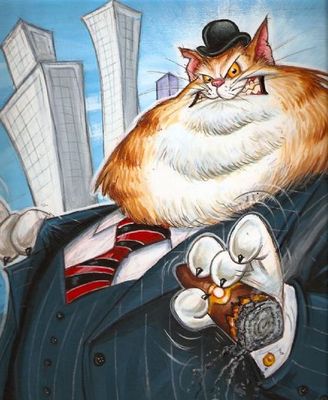
Fat Cats?
Debates will undoubtedly come into action with the Olympic Games. Greater London Authority member John Biggs has gone on-record, stating ‘giving priority to Olympic traffic by changing traffic light timing will clearly cause a massive problems.’ Maybe the vision, and soon-to-be reality, of fat cat Olympic sponsors and promoters lauding over their exclusive lanes whilst ‘ordinary’ locals suffer journeys that will be ‘three or four times longer than normal’ will be the smoking gun in reforming the way London drives.   

Have your say on the debate in the comments section below.
This article was written by the team at www.alternativeroutefinance.co.uk


Friday, 6 July 2012

The Best Business Car?


We’re spoilt for choice in today’s automotive market – which can be seen as both a good thing, and at the same time, quite the annoyance.  Today, I aim in this article to help you decide the best car for your business, let’s get to it.

Bringing together a complete hot-pot of classes and styles, but one thing in common about the vehicle to follow is that they are all fantastic additions to you and your fleet.

BMW 3-Series
The overall winner and one of my personal favourites out there right now, is the BM3 3-Series. Offering you the magical mix of both low, competitive running costs, strong performance, low driver taxation and badged with eco-friendly credentials – this is an award-winning vehicle and a great addition to your fleet.

The 3-Series proves that despite the selection of SUV’s and Crossovers, there is still room for the traditional saloon to powerhouse them out of the way - 63mpg, 119g/km c02 and around 800 miles on a tank of diesel thanks to modes such as ECO PRO and Efficient Dynamics. This car ticks all the boxes and, I mean come on, it’s a BMW.

Ford Focus
Ford also have provided business with a good options, the Focus 1.0T EcoBoost. This model has everything the business driver needs; it’s punchy with lots of low-down overtaking urge, smooth on the road due to good suspension and an overall relaxed vibe from the humming engine. A fantastic all-rounder

The i40
If estate vehicles are more your thing, look no further than the Hyundai i40 – take a bow Hyundai. Smartly styled and elegantly gifted with a huge boot that has, apparently, 1,719 litres of room – you’re sure to be able to put your golf clubs in there…and the caddy. Economical engines and a quality cabin with a five-year warranty, the i40 is just a cut above the rest.

Evoque
What about those of you who, rightfully so, just want to look a bit flash in the latest and greatest model? I welcome to you, the Land Rover Evoque. This is currently the UK’s most desired car and carves a new path for 
4x4’s everywhere – style, power and prestige. The 190bhp 2.2litre diesel delivers all the vroom you could ask for, fuse this with the 6-speed auto – this is a fantastic combo. High-quality materials and designed by the best – it’s a winner.

Thursday, 5 July 2012

Volkswagen and Porsche Merge Deal


Volkswagen and Porsche have finally come to a deal over their merge, Volkswagen are going to buy the remaining 50.1% of Porsche that they do not currently own, Volkswagen had bought a 49.9% stake Porsche back in 2009.

 This merge of the two car manufacturers is set to happen on the 1st of August. Volkswagen is going to pay 4.46 billion Euros to for the share of Porsche so that they can merge into one. The Volkswagen chief executive has said that the merge will be “good for Volkswagen, good for Porsche and good for Germany as an industrial location”.

Things had not always run so smoothly between Volkswagen and Porsche, the two companies had agreed that they would merge back in 2009 and had said that it would be completed by the end of 2011. This was not to happen as they were faced with some large legal problems. One of the problems that they had both faced is the possibility of a very large tax bill. It was reported that this large tax bill may have been as high as 1 billion Euros, what had understandably put off both the companies.

Things have turned around a bit for the two companies as Porsche had been trying to take over Volkswagen for many years before. In 2009 Porsche had attempted to gain the required 75% stake it needed for the takeover of Volkswagen, but this attempt failed. But it is not all bad news for Porsche; with the merge of the two they will benefit greatly, their sales and production levels are set to rise which can only be good news as they have been through some harder times recently. We think that the merge will mean great things and a bright future for Volkswagen and Porsche, Porsche will be joining other successful Volkswagen brands such as Bentley, Bugatti and Skoda. This should be a very interesting future for the automotive industry.

Blogger Gadgets